Where to Find Free Moving Boxes Near You (10 Best Places)
 Nara Sampaio
Learning where to find free moving boxes can instantly lower your moving expenses while keeping durable packaging out of local waste streams.
Relocating to a new residence requires significant time, energy, and financial investment.
However, buying brand-new cardboard containers from commercial supply outlets adds an unnecessary cost to your moving budget.
Most retail stores, supermarkets, and local community groups receive clean, heavy-duty shipping cartons every single day.
Therefore, you can easily gather durable packing supplies without spending your hard-earned money.
You only need to know which local businesses carry the sturdiest materials and how to request them at the right time.
Cardboard prices have increased steadily over recent years due to global supply chain demands.
A standard residential relocation typically requires between 40 and 80 boxes of various dimensions.
When you buy these containers from retail hardware chains or professional moving companies, the final bill can easily exceed $300 for single-use items.
In addition, reusing cardboard containers supports practical, eco-friendly habits. Commercial shipping cartons are designed to protect heavy merchandise during long freight routes.
Because of this high manufacturing standard, they offer superior structural protection for your fragile household belongings.
Sourcing these containers locally gives you access to premium materials for zero cost.
1. Top 10 Sources for Free Moving Boxes
To save you valuable time driving around town, this reference table highlights the best local retailers and community hubs to visit.
| Source / Retailer Type | Box Type & Durability | Best Time to Visit | Ideal Items to Pack |
| 1. Local Wine & Liquor Stores | Heavy-duty cartons with internal dividers | Tuesday and Wednesday afternoons | Glassware, kitchen spices, mugs, ceramics |
| 2. Bookstores (Chains & Local) | Small, reinforced, burst-resistant boxes | Weekday mornings after delivery shifts | Books, heavy photo albums, office binders |
| 3. Grocery Supermarkets | Thick fruit crates and heavy apple cartons | Early mornings around 7:00 AM | Pantry dry goods, small kitchen appliances |
| 4. Wholesale Clubs (Costco, Sam's) | Large open-top display crates | Mid-week mornings during restock hours | Garage hand tools, cleaning products |
| 5. Home Improvement Centers | Large appliance and lighting fixtures | Thursday mornings before recycling runs | Bedding, winter coats, decorative pillows |
| 6. Local Pharmacy Chains | Uniform medium-sized sturdy boxes | Mid-week delivery mornings | Toiletries, vanity accessories, medicine |
| 7. Neighborhood Exchange Groups | Complete moving kits from recent movers | Anytime via local community apps | Full room sets, wardrobe boxes, bubble wrap |
| 8. Local Coffee Shops & Cafes | Clean medium cartons from syrup stock | Early afternoons after peak morning rush | Desk accessories, framed art, pantry items |
| 9. Office Supply & Print Shops | Sturdy copy paper boxes with fitted lids | Friday afternoons before weekend closing | Vital records, family files, small electronics |
| 10. Apartment Complex Hubs | High-volume mixed moving containers | Month-end residential moving cycles | Bulky items, folded linens, seasonal storage |
2. Sourcing Heavy-Duty Boxes from Specialized Retailers
Specialty retailers handle goods that require superior packaging to prevent costly shipping damage. Consequently, these stores represent your most reliable source for sturdy, small-to-medium cartons.
Local Liquor and Beverage Outlets
Liquor stores are widely recognized as the premier destination for reinforced cardboard packaging.
Because glass wine and liquor bottles contain heavy liquids, manufacturers ship them in high-density corrugated cartons.
These boxes feature double-thick perimeter walls designed to withstand vertical crushing. In addition, many beverage boxes include internal cardboard cell dividers.
You can repurpose these cellular grids to organize delicate drinking glasses, porcelain coffee mugs, ceramic vases, and glass spice jars.
Because the dividers prevent individual items from clinking together during transit, you reduce the need for bubble wrap.
For the best outcome, visit the store in the early afternoon on Tuesdays or Wednesdays after daily delivery trucks have been unloaded.
Independent and Chain Bookstores
Bookstores receive continuous shipments of printed materials that present a unique packing challenge due to their extreme physical weight.
Publishers package novels, reference textbooks, and hardcover anthologies in compact, burst-resistant cartons.
These containers feature small dimensions that prevent you from overpacking them.
When people use large boxes for personal libraries, the resulting weight often causes severe lower back strain and causes the bottom tape to give way.
In contrast, standard bookstore cartons maintain their shape when fully loaded and remain easy to carry.
Speak directly with the inventory receiver on weekday mornings, and ask if they can set aside clean, unbroken book cartons before their midday recycling run.
Also Read: Printable 8-Week Moving Timeline Checklist for a Stress-Free Relocation
3. Finding High-Capacity Packaging at Supermarkets and Wholesale Centers
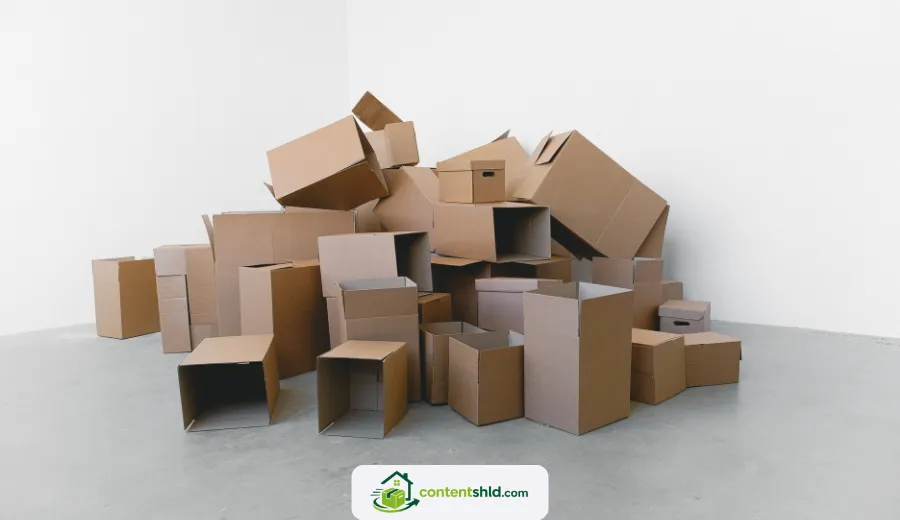
If you need larger containers for lightweight household items, high-volume grocery chains and warehouse clubs offer steady access to sturdy cartons.
Supermarkets and Produce Departments
Large grocery stores process hundreds of commercial shipping containers every single morning.
The produce section is especially valuable because fruit crates require exceptional structural integrity to prevent delicate produce from bruising.
Apple boxes and banana cartons feature reinforced corner pillars and interlocking base flaps that support significant weight.
Because of their rigid corners, you can stack several loaded fruit boxes on top of each other inside a moving truck without crushing the bottom layers.
However, always inspect produce cartons carefully to confirm they are completely clean, dry, and free of organic residues before loading your household goods.
Wholesale Clubs and Hardware Centers
Wholesale warehouse retailers and major home improvement stores receive daily deliveries of large home fixtures, ceiling fans, and countertop appliances.
These master cartons offer the spacious volume required to pack bulky, lightweight items such as down comforters, decorative sofa pillows, winter jackets, and lampshades.
Sourcing these oversized containers prevents you from spending money on expensive specialty wardrobe boxes.
Because warehouse clubs employ custodial teams who run industrial cardboard balers throughout the day, it is helpful to call the department supervisor early in the morning so they can intercept and hold clean boxes for you.
4. Securing Clean, Uniform Containers from Local Offices and Cafes
Uniform box sizes make it significantly easier to pack a moving van securely because identical boxes stack together like building blocks.
Print Shops and Office Supply Retailers
Commercial copy centers, corporate offices, and local printing shops go through cases of standard copy paper on a weekly basis.
Standard copy paper boxes are exceptionally sturdy and feature removable telescoping lids along with integrated side handholds.
These features make them the ideal container for sorting home office files, tax documents, family photo albums, and desktop electronics.
In addition, because copy paper cartons share identical dimensions, you can build stable, interlocked vertical stacks inside your moving vehicle.
This structural uniformity prevents loads from shifting dangerously during transit and maximizes the available floor area.
Neighborhood Coffee Shops and Bakeries
Independent coffee shops and bakery franchises receive weekly deliveries containing dairy products, heavy flavor syrups, espresso beans, and baking ingredients.
These goods are packaged in clean, uniform corrugated boxes that are free from grease or harsh chemical odors.
Because baristas frequently work in tight retail spaces, flattened cardboard clutter accumulates quickly behind the counter.
Visiting your neighborhood cafe during quiet afternoon hours after the morning coffee rush gives you an easy opportunity to pick up clean, medium-sized boxes that are ready for immediate packing.
5. Leveraging Digital Neighborhood Networks and Community Exchanges
Modern hyper-local community platforms make it simple to acquire complete sets of moving supplies directly from neighbors who have recently settled into their new homes.
The Buy Nothing Project and Freecycle Networks
The Buy Nothing Project and Freecycle networks operate on the principle of circular local reuse.
Every weekend, families finish unpacking their belongings and find themselves with garages full of flattened moving boxes.
By posting a polite inquiry on these platforms, you can often arrange a quick porch pickup for an entire household moving kit.
These bundles frequently include specialized wardrobe boxes with metal hanging bars, heavy dish-pack barrels, and rolls of leftover packing paper.
Utilizing these community resources helps your neighbors declutter their space while keeping useful materials in active circulation.
Local Neighborhood Boards and Online Classifieds
Community discussion boards like Nextdoor and local classified platforms feature dedicated "Free" sections where residents post moving supplies on a daily basis.
Many users include photos of their stacked boxes and list their exact neighborhood location for easy collection.
Because these boxes come straight from residential moves, they are already sorted and flattened for vehicle transport.
Set up automated search alerts for moving supplies on your smartphone so you can respond quickly when fresh listings appear in your immediate area.
6. Protocols for Cardboard Quality, Hygiene, and Structural Inspection

Reusing secondhand cardboard requires careful quality control, as damaged or compromised boxes can fail under pressure and damage your valuable belongings.
Screening for Moisture and Chemical Contamination
Always check each secondhand box for past water damage or exposure to harsh household chemicals.
Cardboard is a porous organic material that loses up to seventy percent of its structural load-bearing capacity when exposed to damp conditions.
Avoid any boxes that sat outside on wet concrete loading docks or show dark water rings. Furthermore, reject containers that previously held industrial detergents, bleach, or automotive fluids.
These chemicals leave behind volatile fumes that can transfer directly into your packed clothing, bed linens, and kitchenware.
Testing Structural Rigidity and Corner Integrity
Before accepting a used box, press your palms firmly against the vertical corners and the center of each side panel.
A reliable moving container must feel rigid and resistant to bending. If the corrugated layers feel soft, spongy, or show deep creases along the structural folds, the box has reached the end of its useful lifespan and should be recycled.
In addition, inspect the manufacturer's glued joint running down the corner seam. If this vertical seam is separating, the box will burst open when lifted off the ground.
7. Professional Packing and Reinforcement Techniques for Used Cartons
Applying proper assembly and reinforcement techniques ensures that your collected secondhand boxes hold up reliably during loading, transport, and unloading.
The Professional H-Taping Sealing Method
Standard masking tape, painter's tape, and household cellophane tape lack the adhesive grip and tensile strength required for moving containers.
Always use heavy-duty, two-inch-wide polypropylene packing tape. When assembling a flattened box, fold the smaller flaps inward first, followed by the larger outer flaps.
Apply a continuous strip of packing tape along the center seam, extending the tape at least three inches up the vertical sides.
Next, apply two additional strips along the open perpendicular edges at each end of the box to form a complete "H" shape.
This H-taping technique seals all exterior entry points, keeps dust out, and distributes the internal weight across the entire base of the box.
Weight Distribution and Space Optimization
To prevent boxes from tipping over or collapsing, always place your heaviest items at the bottom of the container and layer lighter items toward the top.
Furthermore, fill every internal void with crumpled unprinted paper, dish towels, or soft clothing. An under-filled box with empty pockets of air will crush inward when another container is placed on top of it.
Conversely, an overfilled box will bulge outward, creating an uneven top surface that prevents safe vertical stacking inside the moving vehicle.
Once you seal the top with tape, clearly label the destination room and basic contents on multiple sides so unloading goes smoothly.
Frequently Asked Questions (FAQ)
How many boxes do I need to pack a standard two-bedroom home?
A typical two-bedroom house requires approximately 45 to 65 boxes across small, medium, and large dimensions. Prioritize small and medium sizes, as large boxes filled with heavy items become dangerous to carry. Gathering a small surplus of 10 extra boxes ensures you do not run out of packing supplies during the final hours of your moving preparation.
When is the best time of day to ask store managers for leftover boxes?
The most effective time to visit local retail stores is on mid-week afternoons between 1:30 PM and 3:30 PM. Morning delivery trucks are fully unpacked by this time, and store staff have a clear idea of what packaging is scheduled for the recycling baler. Approaching supervisors during these calmer hours increases your chances of securing clean, uncrushed cartons.
Are open-top produce and wholesale crates safe for moving fragile items?
Open-top crates are exceptionally sturdy, but they require extra care because they lack top flaps for protective tape sealing. These containers are best suited for short-distance personal transport of non-fragile household goods. For example, they work well for cleaning supplies, small garage hand tools, and indoor potted plants that need to remain upright during the drive.
What should I do with my collection of boxes after I finish unpacking?
Once you finish settling into your new residence, slice the packing tape along the top and bottom seams using a utility knife, flatten the boxes neatly, and list them for free on your local neighborhood exchange app. Passing them along to another family keeps the sustainable reuse cycle going and clears your new living space of clutter.