Learning how to transport large indoor houseplants during a move requires a careful combination of proper hydration, soil management, and protective wrapping techniques.
I have spent over fifteen years managing complex residential relocations, and I can confirm that oversized botanicals represent one of the most fragile cargo categories you will ever handle during a move.
Successful plant relocation relies on strict pre-trip planning, strategic pruning, proper root preservation, and secure vehicle anchoring.
By implementing a systematic moving strategy, you will significantly reduce shock, minimize branch breakage, prevent messy soil spillage, and ensure your favorite leafy companions thrive within their new living environment.
Understanding the unique structural needs of large foliage allows you to prevent irreversible damage before loading day arrives.
Most large indoor plants take years to achieve their impressive stature, making proper transport techniques an essential investment in protecting your valuable green collection.
Every moving scenario presents specific challenges regarding space, distance, and environmental control.
Establishing a clear roadmap well before your scheduled moving date ensures that both your household belongings and your botanical specimens arrive at your new destination in pristine condition.
How Has Plant Relocation Logistical Tech Evolved Over Time?
Historically, homeowners simply tossed potted plants into open truck beds or packed them alongside heavy wooden furniture without adequate protection.
Early moving crews frequently treated botanical collections as simple decor items, leading to high rates of root damage, broken stems, cold shock, and complete plant loss during cross-country transits.
Modern botanical transport relies on specialized horticultural practices, climate-aware packing materials, breathable protective sleeves, and temperature-regulated cargo spaces.
Today, professional movers utilize custom bracing systems, moisture-retaining soil covers, and specialized vehicle straps designed specifically to protect delicate root structures and towering stems during long journeys.
Furthermore, environmental regulations regarding agricultural pests have tightened across state lines.
Moving heavy indoor foliage now requires a clear understanding of regional quarantine laws, soil inspection standards, and proper interstate transport protocols, transforming botanical relocation into a precise logistical process rather than a simple weekend packing chore.

| Historical Moving Methods | Modern Relocation Standards | Primary Risk Reduction |
| Unsecured truck beds | Climate-controlled vehicles | Prevents extreme temperature shock |
| Rigid cardboard boxes | Breathable fleece and kraft paper sleeves | Minimizes branch snapping and leaf loss |
| Overwatering before travel | Controlled hydration schedules | Prevents root rot and heavy pot breakage |
| Random cargo placement | Specialized floor anchoring systems | Prevents pot tipping and soil spillage |
Which Preparations Should You Complete Weeks Before Moving Day?
Preparing your botanical collection should begin at least three to four weeks before your scheduled moving date.
++ How to move a piano safely Without Damaging the Keys
You must inspect every specimen thoroughly for common household pests like spider mites, mealybugs, and scale insects, as travel stress will quickly exacerbate any existing infestations across your foliage.
Pruning tall branches and trimming dead foliage two weeks prior to your move helps conserve the plant’s overall energy reserves.
Moreover, trimming reduces the physical footprint of your large pots, making them considerably easier to wrap securely and maneuver through tight hallways and standard door frames, transport large indoor houseplants during a move.
You should also repot heavy clay or ceramic plants into lightweight plastic nursery pots approximately three weeks before loading day.
Heavy terra cotta containers break easily during transit, whereas durable plastic containers reduce total weight, absorb physical impacts better, and protect the delicate root ball from sudden structural shock.
Timing your watering schedule during the final week before your move is another vital preparation step.
Watering your plants too close to departure day creates heavy, muddy soil that leaks easily, while completely dry soil can crumble away from the roots and leave them vulnerable to physical vibration damage.
Additionally, pay close attention to your local state agricultural guidelines when moving long distances.
The USDA Animal and Plant Health Inspection Service provides clear updates regarding interstate plant movement restrictions to prevent the spread of invasive pests, ensuring your green companions comply fully with federal transport regulations.
Establishing a calm pre-move timeline prevents last-minute rushing, which is the leading cause of accidental branch breakage.
Taking the time to evaluate each plant’s physical dimension allows you to gather the precise packing materials needed for safe transport well in advance.

How To Pack and Wrap Tall Houseplants Safely?
When you begin packing, wrap the main container in durable plastic sheeting or place it inside a heavy-duty trash bag.
Secure the plastic tightly around the base of the main stem with packing tape to lock the soil firmly in place and prevent messy spills inside your vehicle.
Next, gather the outer branches gently upward toward the central stem using soft cotton twine or flexible painter’s tape.
Never pull branches too tightly, as excessive force can crease leaf stems, snap vital limbs, or permanently damage the structural integrity of your large mature specimens.
Slide a tall kraft paper sleeve or breathable cotton sheet over the top of the foliage, working carefully from the apex down.
Kraft paper provides excellent protection against cold drafts while allowing vital airflow, preventing heat build-up that often occurs when using non-breathable plastic wraps on sunny days.
Always avoid using clear plastic stretch wrap directly around sensitive foliage during warm weather moves.
Plastic traps solar radiation and ambient heat rapidly, effectively cooking delicate leaves and creating severe moisture condensation that encourages rapid fungal growth during long hours inside a vehicle.
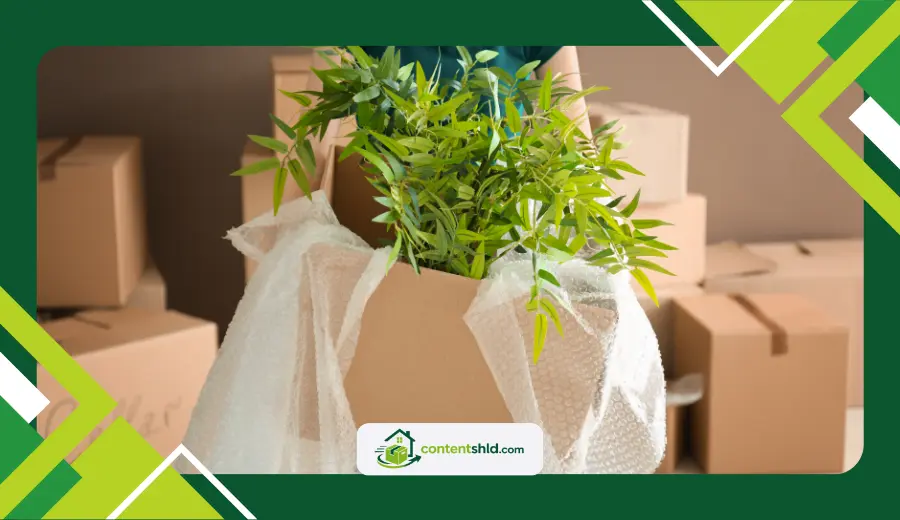
Finally, place the wrapped pot inside a sturdy, double-walled cardboard box that matches the base dimensions closely, transport large indoor houseplants during a move.
Read more: The Best Way to pack and move a flat screen TV
Fill any empty space surrounding the pot base with crumpled butcher paper or bubble wrap to eliminate shifting, ensuring the heavy container remains completely upright throughout the journey.
Mark every container clearly with bright directional arrows and bold lettering stating “LIVE PLANT – THIS SIDE UP” to guarantee correct positioning during every phase of loading and unloading.
| Wrapping Material | Best Used For | Key Advantage |
| Heavy-Duty Kraft Paper | Tall ficus and palm branches | Breathable draft and scratch protection |
| Plastic Trash Bags | Container base and soil surface | Complete soil containment and moisture retention |
| Soft Cotton Twine | Gathering outer limbs and stems | Gentle support without cutting into bark |
| Double-Walled Boxes | Lower pot stabilization | Prevents tip-overs during sudden vehicle stops |
How To Transport Large Indoor Houseplants During A Move In Your Vehicle?
Loading heavy plants into your vehicle requires clear pathways and firm floor positioning.
Never place tall plants on soft car seats, as uneven cushions cause heavy pots to tilt, slide, or tip over completely whenever you navigate sharp turns or step on the brakes.
++ Guide on how to childproof a new home after moving
Position your largest pots upright directly on the vehicle floorboards behind the front seats, or secure them flat against cargo walls.
Use soft moving blankets to cushion the containers, and run durable bungee cords or cargo straps through the handles to lock the pots in place firmly.
If a tall plant cannot stand upright due to low vehicle ceilings, lay the pot down horizontally with great care.
Elevate the top portion of the container slightly using rolled towels, ensuring the main stem rests gently on a supportive cushion to eliminate bending forces on the primary trunk.
When placing plants horizontally, make sure the root ball is firmly anchored so the pot cannot roll around on floorboards, transport large indoor houseplants during a move.
Securing the base prevents soil from shifting away from the root system, which helps maintain crucial root-to-soil contact throughout long driving hours.
Maintaining stable interior temperatures inside your personal vehicle is absolutely essential throughout your journey.
According to agricultural research from the University of Florida IFAS Extension, tropical foliage suffers severe cellular damage when exposed to ambient temperatures below 50°F (10°C) or above 90°F (32°C), making climate control vital during transit.
Run your vehicle’s air conditioner or heater to maintain a comfortable cabin environment between 65°F and 75°F.
Never leave plants parked in direct sunlight with the climate system off, as cabin temperatures can reach lethal levels within twenty minutes during summer or drop below freezing in winter.
What Common Pitfalls Cause Botanical Shock During Transit?
Overwatering your plants right before loading day is a frequent mistake that leads to damaged roots and leaky containers.
Excessively wet soil adds unnecessary weight to large containers, turns floorboards muddy, and creates anaerobic conditions around root systems trapped inside dark, unventilated transport spaces.
Another common mistake involves leaving green foliage inside parked vehicles during brief lunch stops or overnight layovers.
Internal car temperatures rise or fall rapidly within minutes, scorching sensitive leaves on hot summer days or freezing delicate cell structures during chilly winter nights.
Failing to secure the base of tall pots is another widespread error that causes catastrophic plant damage.
When a heavy container tips over during a sudden brake application, the weight of the pot can easily crush main stems, spill soil everywhere, and tear vital root structures away from the plant core.
Skipping step-by-step acclimatization at your destination also causes severe foliage drop within the first two weeks.
Exposing stressed foliage immediately to direct sunlight or strong HVAC vents overwhelms the plant, causing leaves to yellow, curl, and drop off prematurely in your new home.
How To Unpack and Acclimatize Plants In Your New Home?
Unpack your plants immediately upon arrival at your new residence to restore proper airflow and light access.
Carefully cut the outer packing twine and remove paper sleeves from the bottom upward, taking care not to pull on leaves or bend delicate branches back violently.
Inspect each plant carefully for any signs of transit stress, broken twigs, or loose soil around the crown.
Remove any cleanly snapped stems with sharp pruning shears, as leaving torn bark exposed creates entry points for fungal pathogens and opportunistic household pests.
Place your large plants in a quiet, climate-controlled room away from harsh direct sunlight, cold drafty doors, and active heating vents.
Allow the foliage to rest peacefully for several days while the roots adapt to the new humidity levels, light angles, and ambient temperatures.
Resist the urge to re-pot or fertilize your plants during the first month following a major household move.
Adding fertilizer to a stressed root system can cause chemical root burn, while repotting introduces unnecessary physical trauma before the plant has adapted to its new microclimate.
Water your plants lightly only after inspecting the top two inches of soil for moisture dryness.
Resume your standard fertilizer routine only after you notice new, healthy growth emerging, which typically signals that your large botanical specimen has successfully recovered from relocation stress.
Frequently Asked Questions
Can I load tall indoor trees inside a commercial moving truck?
Commercial moving trucks lack proper temperature controls and natural light, subjecting plants to dark, hot, or freezing conditions.
Professional movers often refuse live plants due to legal regulations, so moving them inside your climate-controlled personal vehicle remains the safest option.
How long before moving day should I stop watering large plants?
Give your plants a thorough watering two to three days before your departure date.
This timing allows the soil to absorb necessary moisture while draining off excess water, keeping the roots hydrated without making the heavy pot excessively messy or heavy during loading.
What should I do if a primary stem snaps during transport?
Clean the damaged area immediately using sharp, sterilized pruning shears to make a clean angled cut.
Apply a small amount of damp sphagnum moss around small cracks to encourage healing, or prune the broken branch cleanly back to a healthy node to promote balanced new growth.
++ How to Transport Houseplants Safely When Moving
++ Moving house can be very stressful. Your plants don’t like it much either.