
Learning how to move a heavy wooden dining table safely remains one of the most demanding tasks when relocating substantial heirloom furniture between residences.
Solid hardwood dining tables represent significant financial and sentimental value, yet their broad surfaces, lacquered finishes, and substantial bulk make them exceptionally vulnerable to gouges.
When homeowners attempt to carry an assembled table through narrow doorways without disassembly, protruding table corners frequently collide with door jambs, ruining polished edges instantly.
Furthermore, lifting these dense timber pieces without proper physical mechanics risks warping structural joinery, stripping internal mortise joints, and straining lower lumbar muscles severely.
Whenever I coordinate residential furniture relocations, I emphasize complete structural disassembly, multi-layer surface shielding, and mechanical dollies rather than relying on brute force alone.
Systematic preparation guarantees that your hardwood centerpiece arrives at your dining room completely pristine, level, and scratch-free. Let us examine the proven professional handling methods.
Why Must You Prepare Before You Move a Heavy Wooden Dining Table?
Large dining tables crafted from dense hardwoods like solid oak, walnut, mahogany, or cherry frequently weigh between 150 and 300 pounds.
Attempting to slide an unpadded table across hardwood or tiled floors leaves deep scratches in finished floorboards and loosens delicate table leg joints.
I consistently instruct movers to disassemble tables completely before applying protective layers of moving blankets, stretch film, and corner guards around delicate timber.
Removing the legs lowers the table’s physical profile, allowing carrying teams to navigate tight corners, narrow hallways, and stairwells without impacting walls.
Taking time to protect tabletop finishes from adhesive residue and friction marks prevents costly wood refinishing expenses and preserves your furniture investment for generations.
| Table Style & Timber | Average Weight | Primary Moving Vulnerability | Essential Disassembly Tool |
| Solid Oak Extension Table | 200 – 280 lbs | Joint strain and leaf mechanism warping | Socket wrench and padded leaf bags |
| Rustic Pine Farmhouse Table | 150 – 220 lbs | Softwood surface gouges and leg shearing | Adjustable wrench and heavy corner guards |
| Mid-Century Teak Table | 120 – 170 lbs | Veneer chipping and delicate tapered leg stress | Hex key set and unprinted paper barrier |
| Mahogany Formal Table | 220 – 300 lbs | High-gloss lacquer scratching and claw foot damage | Ratchet set and quilted furniture pads |
| Reclaimed Wood Trestle Table | 250 – 350 lbs | Trestle beam fractures and floor gouging | Mallet, socket set, and furniture dolly |
How Did Early Furniture Joinery Influence Modern Moving Techniques?
The craft of domestic dining table manufacturing transformed radically with the development of knockdown joinery during the eighteenth and nineteenth centuries.
Traditional master cabinetmakers initially assembled massive banquet tables using permanent glued mortise-and-tenon joints, requiring entire teams of porters to transport bulky pieces intact.
As urban populations expanded and families relocated into multi-story residential townhouses, woodworkers began implementing removable bolted legs and iron corner braces.
Understanding this historic shift toward modular joinery reminds homeowners that contemporary wooden tables are engineered specifically to dismantle safely for transportation.
Also Read: How to move a pool table Step-by-Step
How Do You Disassemble Table Legs and Extension Leaves Safely?
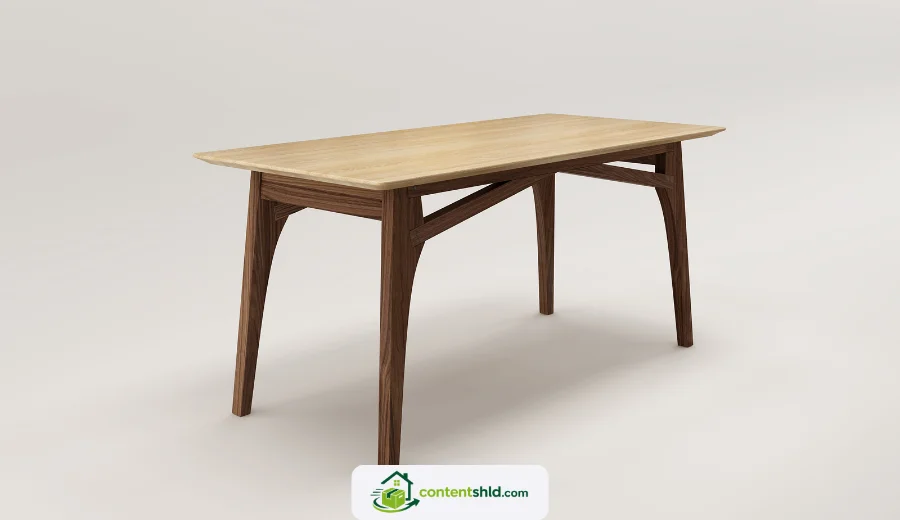
Disassembling a wooden dining table begins with extending the tabletop fully to release and remove internal extension leaves before tackling legs.
Unlock the underside metal latches, slide the tabletop halves apart smoothly, and lift out the removable wooden leaves with two hands.
Wrap each table leaf individually in soft moving pads, securing the blankets with tape applied exclusively to the textile rather than the wood.
Next, place a clean moving blanket on the floor and gently flip the dining table upside down so the tabletop rests safely on the blanket.
Locate the heavy corner brackets securing each leg beneath the apron, utilizing an appropriate socket wrench or hex key to loosen connecting nuts.
Store all removed bolts, lock washers, and wooden dowels inside a clear, sealable plastic bag labeled with the table’s room location.
       TABLE DISASSEMBLY WORKFLOW

 [X] Step 1: Unlock and remove all internal extension leaves
 [X] Step 2: Invert table onto a clean, padded floor blanket
 [X] Step 3: Unbolt corner braces and remove individual legs
 [X] Step 4: Bag all fasteners and tape securely beneath tabletop
Which Wrapping Materials Protect Finished Hardwood Surfaces?
Protecting high-gloss wood finishes requires a breathable, non-abrasive inner barrier before applying heavy-duty protective outer blankets.
Never apply plastic stretch wrap directly onto finished hardwood, as trapped humidity under plastic can create cloudy condensation marks, permanently damaging delicate shellac or varnish.
Begin by covering the entire wooden tabletop with a layer of clean, unprinted moving paper or a soft cotton bed sheet.
Layer thick, quilted moving pads over the cotton barrier, folding the blanket edges completely over the perimeter table rims and lower apron.
Secure the moving blankets tightly using heavy-duty plastic stretch film, wrapping around the perimeter without allowing plastic to touch exposed wood.
To review verified consumer safety guidelines regarding furniture transport and structural durability, consult the official standards on the Federal Trade Commission public portal.
Tape dense foam corner protectors over all four table corners, establishing robust impact defense against accidental collisions during doorway transit.
How Can You Navigate Narrow Hallways and Doorways Without Gouging Wood?
Moving a wide tabletop through interior doorways requires vertical maneuvering and clear physical communication between two capable carrying partners.
Measure your doorway widths, hallway turns, and ceiling heights before lifting the tabletop off the floor to establish your transit path.
Stand the padded tabletop vertically on its long side edge, utilizing durable forearm lifting straps or non-slip work gloves to maintain control.
Slide a four-wheel carpeted furniture dolly beneath the center of the tabletop’s bottom edge, holding the piece upright with both hands.
Guide the rolling table slowly across level flooring, keeping one person at each end to steer clear of door casings and protruding fixtures.
When crossing exterior door thresholds, lift the table off the dolly in unison, tilting the piece gently to clear the doorframe angle.
Taking these precautions ensures you move a heavy wooden dining table smoothly through cramped domestic spaces without scraping wood or damaging walls.
| Transit Stage | Critical Hazard | Preventive Action | Recommended Equipment |
| Floor Inversion | Dropping tabletop on hard floor | Place two quilted moving pads beneath surface | Two-person lift team |
| Doorway Clearance | Impacting wooden door jambs | Carry tabletop vertically on long edge | Neoprene floor runners |
| Threshold Crossing | Jarring shocks to table edge | Lift clear over threshold rather than rolling dolly | Forearm lifting straps |
| Stairwell Descent | Losing grip on heavy edge | Keep lower carrier below load and take paced steps | Textured grip gloves |
| Truck Ramp Ascent | Tipping off narrow dolly base | Secure tabletop flat against interior truck rail | Heavy-duty ratchet straps |
How to Load and Secure a Hardwood Table in a Moving Truck
Positioning heavy wooden furniture inside the cargo hold requires strategic placement to prevent cargo shifts and compressive weight damage during transit.
Never lay a flat wooden tabletop horizontally on the truck deck with heavy cardboard cartons or metal appliances stacked on top of it.
Position the wrapped tabletop vertically against the front cab bulkhead or along the flat wooden side slats of the cargo box.
Slide the wrapped table legs, padded extension leaves, and hardware bags into the safe space directly beside the vertical tabletop.
Thread commercial ratchet straps through the truck’s structural tie-down rails, wrapping straps over the padded tabletop with moving blankets buffering the strap buckles.
For verified industry standards on cargo weight distribution and secure commercial transit regulations, consult the publications provided by the American National Standards Institute for certified guidelines.
Tighten straps until the table stands firmly upright without bending or warping the structural wood under excessive lateral tension.
Also Read: How to move a piano safely Without Damaging the Keys
Practical Steps to Reassemble Your Dining Table in the New Home
Reassembling your dining table requires careful leveling and gentle hardware tightening to restore complete structural integrity without stripping wood threads.
Position the tabletop upside down onto clean moving blankets in your new dining room before attaching the legs.
Align each table leg with its matching corner bracket, threading bolts into position by hand to prevent cross-threading the internal brass inserts.
Tighten each nut progressively with your wrench, alternating between corners to distribute mechanical tension evenly across the frame.
Lift the table upright with your partner, rotating the furniture onto its feet simultaneously without putting diagonal weight on single legs.
Inspect the tabletop with a bubble spirit level, adjusting the threaded leveling glides beneath each foot until the table rests rock-solid.
Executing these steps ensures you move a heavy wooden dining table with total success, restoring your gathering space for future family meals.
Frequently Asked Questions
Can you move a heavy dining table without removing the legs?
Moving a dining table with legs attached significantly increases the risk of snapping corner joints when passing through doorways or navigating tight stairwells. Unless the table is exceptionally small and fits through openings with wide clearance, always remove the legs before transit.
How do you prevent moving blankets from scratching glossy wood finishes?
Ensure the wooden surface is wiped clean of dust before wrapping, as trapped dirt particles under heavy blankets act like sandpaper against lacquer. Use an inner barrier of clean unprinted packing paper or soft cotton sheets before securing quilted moving pads tightly with stretch film.
What should you do if a table leg bolt is stripped or stuck?
If a bolt is stuck, apply a small drop of penetrating lubricant directly to the metal threads, taking care not to stain surrounding wood. If the internal threaded wood insert is stripped, use a slightly larger replacement bolt or fill the hole with wood dowels and wood glue before redrilling.
Is it safe to move a solid wood dining table in rainy weather?
Yes, provided you seal the padded table completely inside water-resistant plastic stretch film or heavy vinyl furniture bags before exiting the home. Never expose bare wood or unsealed moving blankets to rain, as moisture absorption causes hardwood warping and ruined finishes within hours.