
Finding the cheapest way to ship boxes across the country remains the holy grail for budget-conscious movers, college students, and remote workers looking to relocate without bankrupting themselves.
Hiring a full-service moving van or driving a fuel-thirsty twenty-six-foot rental truck across state lines can easily cost several thousand dollars in deposits, insurance, and highway fuel.
When you do not possess massive furniture pieces, paying for an entire cargo van to haul basic personal belongings, cookware, and boxed clothing makes very little financial sense.
However, utilizing smart domestic shipping networks, freight consolidate services, and specialized postal rates allows you to move dozens of boxes cross-country at a tiny fraction of standard commercial costs.
Whenever I evaluate long-distance relocation budgets, I steer clients toward parcel optimization, dimensional weight management, and hybrid cargo carriers over traditional full-service moving companies.
Systematic carrier selection ensures that your packed possessions travel thousands of miles securely, predictably, and on schedule without draining your emergency savings reserves before you arrive.
Understanding how commercial carriers calculate billing weights empowers you to dodge expensive handling surcharges and select the optimal transport carrier for your specific load profile.
Let us explore the complete, step-by-step logistical playbook to uncover the most economical shipping methods available across the country today.
Why Should You Ship Boxes Across the Country Instead of Renting a Truck?
Renting a dedicated one-way moving truck involves heavy hidden expenses, including costly mileage fees, high-octane commercial fuel charges, highway tolls, and mandatory environmental surcharges.
Furthermore, driving a massive, top-heavy commercial vehicle across high mountain passes or dense urban interchanges presents severe mechanical anxiety and real accident risks for everyday motorists.
I consistently calculate that households transporting fifteen to thirty moving cartons save between forty and sixty percent by shipping containers via ground freight rather than driving moving vans.
Shipping your possessions frees you to fly comfortably or complete a relaxed, fuel-efficient road trip in your passenger sedan without towing a cumbersome cargo trailer behind your bumper.
Taking advantage of established national logistics hubs eliminates truck return deadlines, rental lot inspections, and the exhausting physical burden of driving heavy equipment across multi-day highway routes.
| Transport Method | Typical Cost Range (20 Boxes) | Transit Speed | Best Suited For | Major Risk or Limitation |
| USPS Media Mail | $40 – $90 total | 6 to 10 Business Days | Dense book collections, vinyl, sheet music | Strict inspection rules; strictly no clothing |
| Consolidated Ground (UPS/FedEx) | $600 – $1,100 total | 3 to 5 Business Days | Clothing, general housewares, small decor | Severe dimensional weight surcharges |
| LTL Palletized Freight | $450 – $850 total | 5 to 8 Business Days | 15+ heavy cartons, bulky dense goods | Requires curbside pallet delivery/pickup |
| Bus/Train Cargo Logistics | $300 – $600 total | 4 to 9 Business Days | Medium, non-fragile personal luggage | Station-to-station pickup required |
| DIY Rental Truck Haul | $1,800 – $3,400 total | Driver Dependent | Complete home furniture & multiple rooms | High fuel costs, tolls, and physical fatigue |
How Did Intermodal Freight Reshape Long-Distance Relocation Logistics?
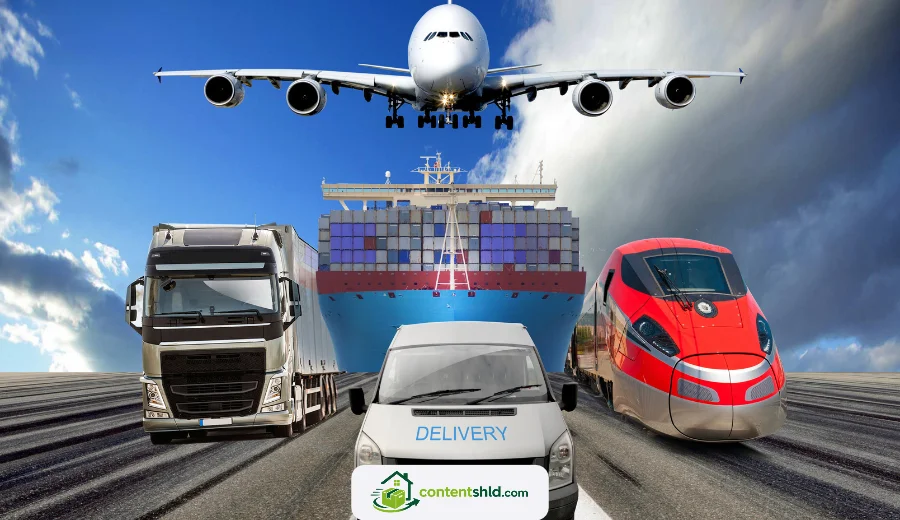
The evolution of domestic freight transit accelerated dramatically following the implementation of standardized intermodal shipping containers and automated sorting facilities throughout the late twentieth century.
Before automated tracking and computerized logistics networks, cross-country parcel transport remained notoriously slow, opaque, and cost-prohibitive for ordinary domestic households moving personal property between states.
As transcontinental freight companies introduced hub-and-spoke distribution corridors, carriers optimized underutilized belly cargo space across cross-country rail lines and long-haul commercial tractor-trailers.
Today, independent consumers can tap directly into these massive industrial logistics backbones, booking discounted excess freight capacity that was historically reserved exclusively for multinational commercial retailers.
Understanding this industrial backbone helps movers recognize that moving boxes long-distance does not require bespoke moving crews when regional freight networks operate continuously along transcontinental corridors.
Read Also: How to avoid hidden fees in moving contracts
How to Maximize USPS Media Mail for Dense Cultural Media
The United States Postal Service provides an extraordinary shipping bargain called Media Mail, designed specifically to encourage the nationwide dissemination of educational and cultural materials.
Media Mail rates are calculated purely by physical weight rather than geographic distance, meaning shipping a box across state borders costs the exact same rate as sending it thousands of miles.
You can pack heavy hardcover books, university reference manuals, educational manuscripts, printed sheet music, vinyl records, and recorded media into boxes for pennies per pound.
Never sneak clothing, kitchenware, personal letters, or general home items into Media Mail cartons, because postal inspectors possess the legal authority to open and inspect packages in transit.
If inspectors discover unauthorized household items inside a Media Mail container, the postal service will retroactively slap expensive Priority Mail rates onto your shipment upon arrival.
For authorized postal rate tables and detailed eligibility guidelines, consult the official mailing standards published on the United States Postal Service regulatory portal.
Wrapping books flat in small boxes and sealing them with reinforced tape ensures your heaviest cultural collections traverse the entire nation without incurring commercial parcel freight surcharges.
       CARRIER SELECTION DECISION TREE

 [Books, Vinyl & Printed Media] --------> USPS Media Mail (Cheapest per lb)
 [15 to 30 Mixed Household Boxes] -----> LTL Palletized Freight (Cheapest per unit)
 [5 to 10 Lightweight Personal Boxes] -> Third-Party Discount Ground (FedEx/UPS)
 [Oversized Furniture + Entire Home] --> Freight Container / Moving Trailer
How Does Dimensional Weight Affect Cross-Country Parcel Rates?
Major parcel delivery networks like UPS and FedEx utilize a specialized pricing calculation called Dimensional Weight (DIM Weight) to bill packages based on cubic size rather than scale weight.
Dimensional weight reflects the amount of physical space a box occupies inside delivery vans, meaning a large, featherlight box of pillows can cost more to ship than a heavy box of tools.
Carriers multiply the box length, width, and height in inches and divide the resulting cubic total by an industry divisor, typically 139 for standard commercial ground services.
If the calculated dimensional weight exceeds the actual scale weight on your bathroom scale, the carrier bills you at the significantly higher dimensional weight rate automatically.
To avoid costly dimensional penalties, choose the smallest possible corrugated container that safely encloses your items, trimming excess carton height whenever feasible before taping flaps.
To review verified consumer shipping standards and commercial carriage rules, examine the freight compliance resources maintained by the Federal Trade Commission for consumer protection insights.
Keeping cardboard cartons dense, compact, and completely free of empty interior voids prevents you from paying expensive air transport penalties on ground courier networks.
How to Utilize Discount Shipping Platforms to Slash Courier Costs
Walking up to a retail shipping counter at a commercial pack-and-ship store guarantees you pay maximum standard retail rates, which instantly eliminates your moving budget savings.
Commercial retail counters include substantial storefront markup margins, charging ordinary consumers significantly more than commercial business accounts pay for identical freight lanes.
Instead, create an account on third-party shipping software platforms like Pirate Ship, Shippo, or ParcelPath, which provide immediate access to deeply discounted commercial-tier rates.
These web-based platforms pass wholesale negotiated discounts down to consumers, saving between forty and eighty percent on domestic Priority Mail and commercial ground shipping services.
Purchase standard shipping boxes, pack your personal belongings carefully at home, weigh each parcel accurately using a digital luggage scale, and print your prepaid shipping labels online.
Tape your prepaid thermal or paper labels firmly across box tops, scheduling free carrier parcel pickups directly from your front porch to bypass busy retail counters completely.
Using digital postage tools ensures you ship boxes across the country at insider commercial pricing, stripping hundreds of dollars in markup out of your moving expenses.
| Strategy Component | Retail Counter Method | Digital Discount Platform | Net Budget Difference |
| Shipping Rate Tier | Full Retail Standard Rate | Commercial Plus Wholesale Rate | 40% to 75% Savings |
| Label Generation | Manual handwritten clerk entry | Automated digital batch printing | Saves 15 minutes per box |
| Package Drop-Off | Waiting in long retail store queues | Free carrier front-porch pickup | Zero driving & zero lines |
| Box Sourcing Cost | Purchasing expensive store boxes | Buying bulk cartons or clean reusables | Saves $3 to $6 per carton |
| Dimensional Auditing | Manual counter clerk measurement | Pre-measured home dimensional cuts | Eliminates unexpected surprise fees |
Why Palletized LTL Freight Is Ideal for Bulk Household Shipments
If you need to move between fifteen and thirty-five sturdy boxes without any large furniture pieces, palletized Less-Than-Truckload (LTL) freight provides unmatched economic value.
LTL carriers transport consolidated commercial pallet loads inside fifty-three-foot freight trailers, charging flat rates based on pallet footprint, total weight class, and freight transport lane distance.
Acquire a standard wooden four-way pallet from a local hardware supplier, stacking your packed cardboard containers onto the pallet in tight, interlocking brick-style layers.
Keep total pallet height under five or six feet to maintain center-of-gravity stability, placing heavier book boxes along the base and lighter apparel cartons near the top.
Wrap the entire loaded pallet tightly with industrial eighty-gauge stretch film, wrapping at least five continuous passes around the wooden base slats to lock the boxes securely to the skid.
Strap the entire load vertically with heavy polyester banding, establishing an impenetrable cargo block that forklifts can transfer without ever touching your individual cardboard cartons.
Arranging terminal-to-terminal pickup and drop-off saves additional money by bypassing commercial liftgate fees, making palletized LTL freight an extraordinarily affordable bulk moving alternative.
Other people also read: Detailed Breakdown: DIY moving vs hiring professional movers cost
Practical Steps to Prepare and Ship Boxes Across the Country
Successfully sending your personal belongings over cross-country distances requires disciplined container selection, heavy-duty taping, and redundant tracking systems on every carton.
Purchase fresh, brand-new heavy-duty corrugated cartons with an Edge Crush Test (ECT) rating of at least 32 or 44 to withstand heavy industrial conveyor handling.
Avoid using thin grocery store boxes or weathered second-hand fruit cartons, as degraded cardboard flaps easily collapse under the compressive weight of stacked cargo in transit.
Seal all bottom and top carton seams using heavy-duty fiberglass-reinforced water-activated tape or wide acrylic packing tape applied in a continuous, double-reinforced “H-pattern” layout.
Place a backup paper slip containing your name, mobile phone number, email address, and destination address directly inside each box before sealing the upper flaps.
Cover exterior shipping barcode labels with clear packing tape to prevent wet weather smearing, keeping tracking numbers organized inside a master digital spreadsheet for daily transit updates.
Executing this structured packing and labeling process ensures that you ship boxes across the country safely, reliably, and without unexpected logistical headaches.
Moving Logistics: Key Steps for moving into a new construction home
Frequently Asked Questions
What is the cheapest overall carrier to ship boxes across the country?
For qualifying printed media, educational texts, and vinyl records, USPS Media Mail is unbeatable. For general mixed household goods, third-party postage platforms offering discounted UPS Ground or consolidated LTL pallet freight services offer the lowest cost per pound.
How much does it cost on average to ship a 40-pound box cross-country?
Shipping a standard 40-pound box cross-country via discounted commercial ground networks typically costs between $35 and $60, depending on dimensional size and zone distance. At retail counters, that identical parcel can easily cost between $75 and $110.
Can you ship plastic storage bins instead of cardboard moving boxes?
Yes, but carriers often add non-standard packaging surcharges to smooth plastic bins because plastic tubs slide off high-speed automated sorting conveyor belts. If you use plastic containers, select heavy-duty totes, zip-tie the lids shut, and wrap the exterior with cardboard sleeves.
How long does ground shipping take to cross the entire country?
Standard ground shipping services across transcontinental distances typically take between four and seven business days. Weather delays, regional terminal sorting volume, and weekend transit pauses can occasionally add one or two additional days to cross-country freight estimates.