Learning how to dispose of cardboard moving boxes responsibly represents the crucial final step of any household relocation, yet mountains of packaging waste frequently clutter new homes for weeks.
When dozens of empty cartons accumulate inside hallways and garages after unpacking, ignoring their disposal creates annoying fire hazards, physical obstructions, and unnecessary environmental strain in regional landfills.
However, establishing an efficient recycling and reuse plan allows you to clear valuable living space quickly while keeping sturdy corrugated fiberboard circulating within local circular economies for years.
Whenever I organize post-move setups, I enforce an immediate breakdown protocol rather than allowing cardboard cartons to linger in damp garages or outdoor driveways awaiting municipal collection.
Systematic handling ensures clean packing materials stay protected from rainwater, preserving their fiber integrity for secondary use, local donations, or municipal processing streams. Let us explore the proven strategies.
Why Must You Dispose of Cardboard Moving Boxes Responsibly?
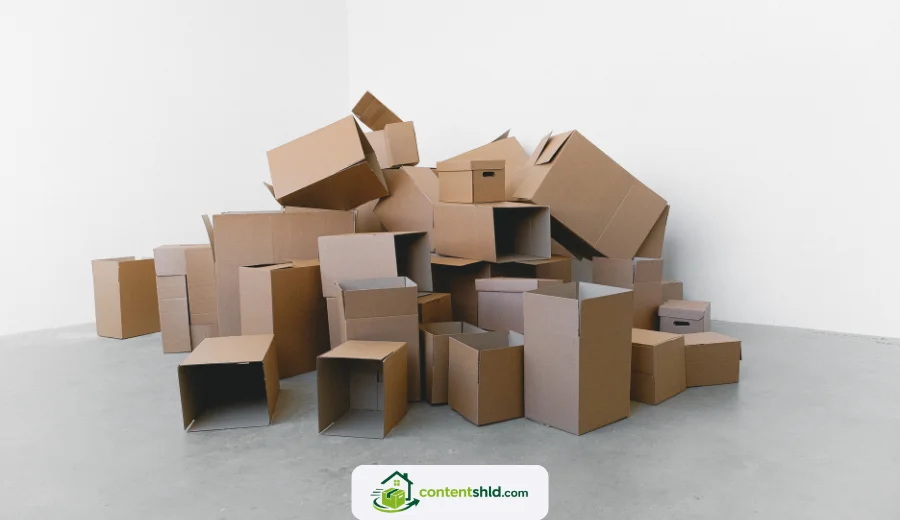
Discarding clean corrugated cartons directly into general household trash fills local landfills with valuable wood pulp fibers that manufacturers desperately need for domestic packaging production cycles.
Decomposing paper inside sealed landfills breaks down anaerobically, generating methane gas that significantly contributes to regional greenhouse emissions and overall environmental degradation over extended timelines.
I consistently advise new homeowners to view used moving cartons as valuable household assets rather than useless debris that belongs on curb edges during stormy weather.
Furthermore, leaving empty cardboard stacks exposed to moisture outside creates damp nesting zones that rapidly attract silverfish, roaches, rodents, and destructive structural termites around foundations.
Taking proactive measures to clear clean containers prevents pest infestations, keeps residential neighborhoods tidy, and supports community members who require moving supplies for upcoming relocations.
| Disposal Method | Environmental Impact | Financial Cost / Return | Preparation Required |
|---|---|---|---|
| Community Donation | Zero waste (extends life) | Free / Great community goodwill | Flattening and bundling clean cartons |
| Curbside Recycling | Low waste (fiber recovery) | Free municipal service | Peeling tape and flattening flat |
| Direct Online Resale | Zero waste (circular use) | Generates modest cash returns | Sorting by uniform size and shape |
| Drop-Off Depot | Low waste (bulk processing) | Free public facility drop | Transporting bundles in personal vehicle |
| Garden Sheet Mulch | Regenerative (soil barrier) | Free organic weed suppressor | Removing all tape, staples, and labels |
How Did Corrugated Cardboard Become the Standard Moving Container?
The history of modern shipping containers traces back to the mid-nineteenth century, when fluted paper was initially patented in England to line tall top hats.
By the early twentieth century, manufacturers perfected corrugated fiberboard, replacing heavy, splintered wooden crates with lightweight, shock-absorbing containers that revolutionized freight transport across the entire continent.
Today, corrugated cardboard represents one of the most widely recycled industrial materials globally, boasting exceptional recovery rates when consumers handle fibers with basic domestic discipline.
Understanding the industrial resilience of fluted fiberboard helps homeowners appreciate why preserving box condition matters so much when choosing how to pass materials forward responsibly.
Learn more: Guide on how to childproof a new home after moving
How to Prepare Cartons Before You Dispose of Cardboard Moving Boxes
Proper preparation stands as the single most critical factor determining whether municipal recycling processing facilities accept or reject your post-move paper bundles.
Begin by running a utility knife along the bottom tape seams, slicing through adhesive cleanly rather than ripping cardboard flaps and destroying underlying structural integrity.
Flatten every single container completely flat, ensuring boxes occupy minimal physical volume inside transport vehicles, exterior recycling bins, or personal storage closets.
Remove all excessive plastic packaging tape, synthetic shipping label sleeves, and large metal staples, as non-paper adhesives frequently jam sorting machinery at processing centers.
You can examine verified industrial recycling standards and municipal packaging recovery regulations directly on the Environmental Protection Agency public portal for federal guidance.
Never leave flattened cardboard stacks outdoors overnight without waterproof tarp covers, because morning dew and sudden rain showers degrade cellulose fibers beyond usable recycling standards.
       CARDBOARD PREPARATION WORKFLOW

 [X] Step 1: Slice bottom tape cleanly with utility knife
 [X] Step 2: Strip off plastic tape, labels, and staples
 [X] Step 3: Flatten all cartons completely flat
 [X] Step 4: Bundle together by size using natural twine
Where Can You Donate Clean Moving Boxes Locally?
Donating your intact moving boxes to neighbors or local non-profit groups saves families significant money while eliminating packaging waste from residential waste streams completely.
Local animal shelters, charity thrift stores, and food pantries constantly require sturdy corrugated containers to transport donated goods, veterinary supplies, and emergency grocery packages.
Similarly, posting your available supply on neighborhood exchange apps, community message boards, or social media marketplaces yields immediate responses from nearby families preparing to move.
I frequently direct clients to bundle boxes into uniform groups of ten, securing them with biodegradable jute twine so recipients can load supplies quickly.
Offering free boxes to individuals within your immediate neighborhood fosters meaningful local connections while permanently keeping durable packaging out of congested regional waste facilities.
When Should You Resale or Exchange Used Cardboard Cartons?
If you purchased specialty packaging like double-walled dish packs, wardrobe containers with metal hanging bars, or heavy television boxes, selling them recovers meaningful relocation cash.
Specialty boxes carry substantial retail prices when purchased brand new, making budget-conscious movers eager to purchase gently used containers at a reasonable discount.
List your specialty cartons as a bundled package on local digital marketplaces, setting prices roughly fifty percent below primary retail hardware store rates for fast transactions.
Some regional moving container exchanges and independent box brokers actively purchase uniform, clean moving boxes directly from homeowners to resell across regional commercial networks.
Taking time to organize and resale durable cartons ensures you dispose of cardboard moving boxes profitably while helping others lower their moving expenses safely.
| Box Category | Original Retail Value | Resale / Exchange Value | Primary Target Buyer |
|---|---|---|---|
| Wardrobe Boxes (with bar) | $15 – $22 each | $7 – $10 each | Long-distance family movers |
| Dish Pack Barrels | $8 – $14 each | $4 – $7 each | Movers with extensive china sets |
| Mirror / Artwork Boxes | $10 – $16 each | $5 – $8 each | Art collectors and gallery owners |
| Standard 1.5 cu ft Book Boxes | $2 – $3 each | $1 each (in bundles) | Students and home library owners |
| Large 4.5 cu ft Cartons | $4 – $6 each | $2 each (in bundles) | Families moving bulky bedding items |
How Can You Repurpose Cardboard in Home and Garden Projects?
Repurposing corrugated containers across domestic outdoor projects represents an ingenious, fully biodegradable way to absorb excess cardboard without generating municipal transport emissions.
Cardboard makes an exceptional base barrier for sheet mulching, commonly known as lasagna gardening, which suppresses stubborn weeds and enriches underlying topsoil naturally.
Remove every piece of plastic tape and shipping labels, lay flattened unprinted cardboard directly over grass, and saturate the paper thoroughly with garden hoses.
Cover the saturated cardboard layer with several inches of organic compost, wood chips, or shredded leaves, allowing earthworms to digest the fibers over several months.
For certified horticultural guidelines on organic weed management and regenerative composting practices, review the scientific resources published by the Soil Science Society of America for practical techniques.
Cardboard also serves as outstanding floor surface protection during upcoming interior painting sessions, furniture refinishing projects, or garage workbench spill defense.
Moving on a budget: How to pack jewelry for moving Without Tangling Necklaces
How to Manage Wet, Damaged, or Oil-Stained Moving Boxes
Not every cardboard carton survives a chaotic household move in pristine condition, especially after unexpected weather disruptions or plumbing fluid leaks inside transport vehicles.
Cartons saturated with kitchen cooking oils, automotive fluids, or pet accidents cannot undergo standard recycling because grease contaminates thousands of gallons of paper pulp.
Similarly, cardboard that absorbed rainwater and developed dark, fuzzy mold patches inside storage units poses respiratory health risks and must enter general municipal waste.
Tear unsoiled, clean sections away from damaged cartons using a serrated utility blade, sending pure cardboard sections to municipal recycling while trashing soiled pieces.
Compost plain brown unprinted cardboard fragments inside domestic backyard compost tumblers, balancing nitrogen-rich green food scraps with carbon-rich brown paper shreds effectively.
Understanding these critical separation boundaries ensures that you dispose of cardboard moving boxes without inadvertently spoiling clean recyclables inside municipal sorting facilities.
Practical Steps to Clear Your Home of Moving Waste
Clearing your new home of packaging waste requires disciplined physical organization, daily progress targets, and dedicated sorting zones throughout your first unpacking week.
Establish an exterior staging zone along garage perimeter walls, stacking flattened boxes upright inside a large open wardrobe box to maintain orderly piles.
Never allow empty cardboard boxes to accumulate inside bedrooms or primary living areas, as visual clutter prolongs moving stress and hinders room setup.
When you deliberately dispose of cardboard moving boxes through structured reuse, local donations, or precise recycling, you complete your move cleanly and conscientiously.
Frequently Asked Questions
Can you put moving boxes in standard curbside recycling bins?
Yes, provided you cut or fold cartons small enough to fit completely inside the bin with the lid fully closed. Never leave oversized cardboard jammed tightly inside containers, as automated municipal mechanical arms cannot empty jammed paper during collection runs.
Do you really need to remove all tape from cardboard boxes before recycling?
While modern paper mills possess screening systems to remove minor adhesives, removing heavy plastic packing tape and synthetic shipping labels prevents machine clogs. Taking thirty seconds to strip primary tape lines ensures your cardboard bundles pass initial facility inspections.
What should you do with cardboard moving boxes if it rains on collection day?
Keep flattened cardboard bundles inside your garage or covered porch until the morning of collection, rather than setting them out overnight. If heavy rain persists, wait until the following municipal collection cycle, because wet cardboard often gets rejected as contaminated refuse.
Can pizza boxes and food containers be recycled alongside moving boxes?
Food containers soiled with grease, melted cheese, or sauce residue must not mix with clean corrugated moving boxes. Food grease ruins paper pulping processes; place clean top lids in recycling if free of oil, and discard greasy bottoms into household trash.
Pingback: How to sanitize used appliances in a new home - contentshld.com
Pingback: How to move a memory foam mattress without bending it - contentshld.com
Pingback: How to help pets settle into a new home Fast - contentshld.com