When you attempt to move a memory foam mattress without bending it, you preserve the integrity of specialized contouring materials, protect internal comfort layers, and ensure your investment remains fully covered under original manufacturer warranty guidelines.
Moving a heavy visco-elastic bed requires meticulous planning and specialized equipment because dense internal foam cores lack rigid structural support.
Visco-elastic material reacts to body heat and pressure, adjusting dynamically to provide optimal spinal alignment throughout the night.
However, when unsupported during physical transit, this flexibility becomes a major structural liability.
Transporting your bed without rigid support causes severe internal shear stress, stretching core layers and permanently damaging internal support zones.
Why Is Bending a Memory Foam Mattress So Destructive?
Memory foam relies on visco-elastic open cells that absorb pressure under warmth and body weight. When cold or unweighted, these layers act as a dense solid block.
Bending or folding the core forces inner layers to stretch beyond normal limits while outer layers compress excessively.
Over time, this shear stress creates permanent deep creases, breaks internal support zones, and ruins spine alignment support.
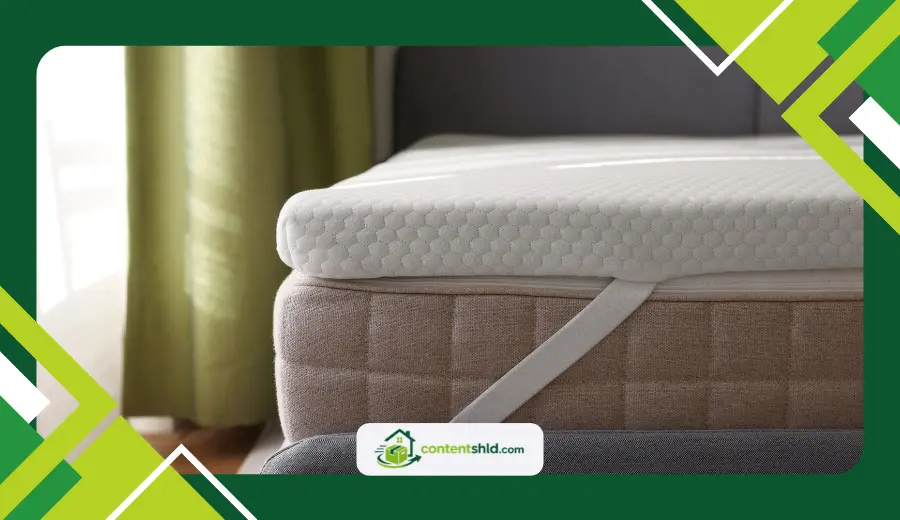
What Logistical Challenges Exist When Handling Dense Foam?
Unlike traditional inner-spring units with steel border wires, foam mattresses lack perimeter structural reinforcement.
When lifted vertically without support, the material naturally sags under its own substantial dead weight.
++ How to negotiate prices with moving companies
This lack of rigidity makes handling particularly difficult in narrow stairwells and tight door frames. Attempting to maneuver an unsupported foam block often leads to severe creasing or catastrophic core tearing.
How to Move a Memory Foam Mattress Without Bending It: Step-by-Step
To move a memory foam mattress without bending it, build a solid structural frame around the foam using rigid materials before shifting it off the bed frame.
1. Strip and Prepare the Mattress Core
Remove all sheets, protectors, and toppers so the mattress shell sits completely bare. Allow the mattress to sit flat in room-temperature air for an hour to ensure full structural firmness.
Read more: Essential tool kit to unpack after moving
2. Encase in Heavy-Duty Plastic
Slip a heavy-duty moving bag completely over the mattress. Seal the open ends tight with packing tape to block moisture, dust, and sharp edges.
3. Sandwich Between Plywood Sheets
Place one sheet of 3/4-inch plywood flat on the bed frame beside the mattress. Slide the encased mattress onto the board, then place a second matching sheet directly on top to create a firm sandwich structure.
++ How to dispose of cardboard moving boxes Responsibly
4. Secure the Sandwich Layer Tight
Wrap four heavy-duty ratchet straps around the entire wooden sandwich assembly. Tighten the straps evenly so the top and bottom boards grip the mattress securely without flexing the edges.
5. Move with Proper Lifting Technique
Lift the sandwich structure upright onto its side with two people. Keep the assembly vertical, carrying it with steady, balanced leg movements through doorways and narrow corridors.

Essential Equipment Required for Safe Transport
| Gear Item | Primary Purpose | Structural Value |
| Heavy-Duty Mattress Bag | Keeps out dirt, moisture, and debris | Prevents surface tearing during transit |
| Plywood Sheets (2x) | Provides flat external rigidity | Eliminates sagging and structural bending |
| Ratchet Straps (4x) | Secures sandwich assembly tightly | Prevents slippage between board layers |
| Furniture Pads | Cushions edges and outer plastic | Prevents friction tears against truck walls |
How Should You Position the Mattress Inside the Moving Truck?
Never lay a memory foam mattress over uneven boxes or allow it to slouch diagonally against cargo. Transport it flat on the truck floor or store it flat on a solid platform.
If floor space is tight, keep the plywood sandwich assembly upright against a flat truck wall. Anchor it firmly using wall-mounted E-track straps so it cannot bow or sag under weight.
For additional moving safety guidelines, consult the official transport recommendations from the Federal Motor Carrier Safety Administration or check material care standards at the National Institute of Standards and Technology.
What Climate Controls Prevent Material Damage During Transit?
Visco-elastic foam exhibits high thermal sensitivity, becoming overly soft in excessive heat and brittle in extreme freezing temperatures.
Exposure to high humidity can also trap moisture inside open-cell layers, encouraging mold growth inside the core.
When planning long-distance moves, utilize climate-controlled transport units to maintain ambient conditions between 60°F and 75°F.
This thermal stability keeps internal layers rigid enough for stable handling without risking cell degradation.
How to Move a Memory Foam Mattress Without Bending It in Storage
When placing your bed into temporary or long-term storage facilities, lay the unit completely flat on a elevated pallet or platform.
Placing heavy boxes or furniture on top of stored foam creates permanent impressions that destroy comfort contours.
Never store a memory foam mattress vertically for extended periods, even inside structural sandwich boards.
Gravitational pull will eventually cause internal foam layers to slump toward the base, permanently distorting the mattress geometry.
Why Temperature Adjustments Matter Before Transport
Memory foam is dynamic and highly temperature-sensitive. Warm room temperatures soften the visco-elastic material, making the mattress significantly more pliable, heavy, and prone to sagging during movement.
Conversely, freezing temperatures harden the open-cell core, rendering it brittle and vulnerable to internal micro-tears if flexed.
Allow your mattress to stabilize in a climate-controlled environment (around 65°F to 72°F) for several hours before mounting your plywood sandwich framework.
Maintaining thermal stability ensures structural stiffness without risking permanent cell damage.
How to Navigate Narrow Doorways and Tight Stairwells
Maneuvering a rigid plywood-sandwiched queen or king mattress requires strategic planning through tight household choke points.
Always measure hallway clear spaces, door frames, and stairwell turns prior to lifting. Carry the secured assembly vertically on its long edge, utilizing two people positioned at opposite lower ends to distribute dead weight evenly.
Never pivot the board assembly over banisters or bend the corners around sharp wall turns. Clear all floor hazards along your path to maintain steady, fluid momentum throughout the movement process.
Post-Move Setup and Core Recovery Guidelines
Once your mattress reaches its final destination, unclamp the ratchet straps and remove the plywood sheets carefully.
Place the mattress completely flat onto its bed frame immediately to relieve any lateral pressure applied during transit.
Leave the plastic cover intact while positioning the mattress, then carefully slice open the wrapping without using sharp utility blades near the foam edges.
Allow the mattress to settle flat at room temperature for at least two to four hours before putting on fresh linens.
Common Moving Mistakes and Solutions
Mistake: Carrying the mattress by its built-in handles.
Solution: Built-in handles are designed for minor positioning on a frame, not carrying total weight. Always hold the bottom edge of the plywood support boards instead.
Mistake: Leaving the mattress upright without support for days.
Solution: Foam slowly sags and distorts if stored vertically without a rigid sandwich layer. Set it back flat on a platform as soon as you arrive.
Mistake: Vacuum sealing thick multi-layer foam at home.
Solution: Consumer vacuum bags apply uneven suction that can tear laminated foam layers. Use the plywood sandwich method to transport the mattress at its natural thickness.

Frequently Asked Questions
Can you store a memory foam mattress on its side temporarily?
You can store it on its side for up to 24 hours if it is tightly clamped inside a rigid plywood sandwich structure. Beyond that frame window, it must lay flat to prevent internal core displacement.
What size plywood is best for securing a queen mattress?
Two sheets of 4ft x 8ft 3/4-inch exterior plywood cover a standard queen mattress cleanly. Trim or align the sheets so they extend slightly past the mattress edges to absorb impact.
Will bending a memory foam mattress void its warranty?
Yes, most manufacturers explicitly state in their terms that folding, rolling, or creasing a mattress after its initial unboxing voids all warranty coverage permanently.
++ How to Move a Mattress-in-a-Box: Re-Box, Fold, and Transport
++ How to Move a Mattress Safely: A Step-by-Step Moving Guide