Learning the best ways to pack and transport an aquarium fish tank requires meticulous preparation, strict structural care, and biological timing to avoid catastrophic glass failure and livestock losses.
Aquariums represent a fragile combination of brittle float glass, flexible silicone seals, and delicate aquatic ecosystems that react violently to road vibration and sudden temperature drops during transit.
When hobbyists attempt to move an aquarium with gravel or water left inside, uneven torque and concentrated weight instantly crack bottom panels and permanently tear waterproof perimeter seals.
Furthermore, neglecting the living biological filter media during the moving window causes beneficial nitrifying bacteria colonies to perish, triggering lethal ammonia spikes once you refill the aquarium.
Whenever I coordinate residential moves featuring delicate aquatic systems, I enforce total tank drainage and biological preservation protocols rather than treating the setup like basic household furniture.
Systematic preparation guarantees that your aquarium arrives structurally intact, watertight, and biologically viable at your new home. Let us examine the proven methods to protect your setup.
Why Must You Pack and Transport an Aquarium Fish Tank Completely Empty?
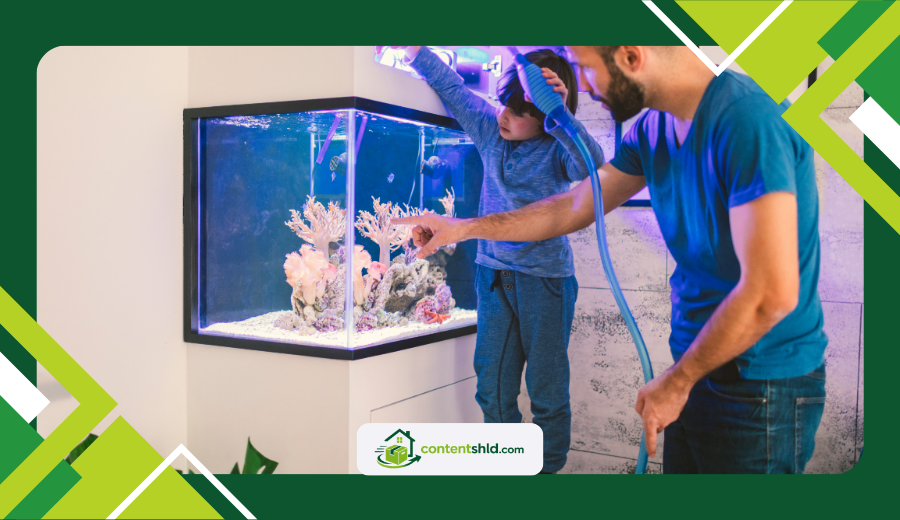
Water weighs roughly 8.34 pounds per gallon, while wet substrate adds immense physical mass that places intense stress across lower glass joints during manual carrying.
Attempting to transport an aquarium containing even two inches of water or wet sand creates severe torsional stress that ruptures silicone seams as vehicles turn corners.
I consistently instruct aquarium keepers to drain all water, bag livestock separately, and scoop out heavy substrates before lifting glass tanks off their structural stands.
Stripping the aquarium down to its bare glass frame eliminates unpredictable internal water sloshing, making the vessel significantly lighter and safer for two people to carry.
Taking time to empty the enclosure completely prevents sudden structural fractures, protects home floorboards from leaks, and safeguards your aquatic investment for years of future enjoyment.
| Tank Volume & Material | Empty Weight | Water Weight (Full) | Minimum Moving Team | Primary Transit Hazard |
| 20-Gallon Glass Tank | 25 – 32 lbs | ~166 lbs | 1 to 2 People | Corner chips and rim cracks |
| 55-Gallon Glass Tank | 78 – 85 lbs | ~458 lbs | 2 People | Center pane flex and seal shear |
| 75-Gallon Glass Tank | 115 – 140 lbs | ~625 lbs | 2 to 3 People | Bottom panel cracking under torque |
| 125-Gallon Glass Tank | 180 – 210 lbs | ~1,040 lbs | 3 to 4 People | Structural frame twisting on stairs |
| 50-Gallon Acrylic Tank | 45 – 55 lbs | ~415 lbs | 1 to 2 People | Severe surface scratching and scuffs |
How Did Modern Glass Aquaristics Shape Safe Transport Logistics?
The evolution of domestic aquariums shifted radically during the 1960s with the introduction of high-tensile room-temperature vulcanizing silicone adhesives across commercial manufacturing lines.
Prior to modern silicone technology, hobbyists relied on heavy slate-bottomed tanks bound by rigid steel angle-iron frames and linseed oil pitch that cracked under vibration.
All-glass aquariums eliminated toxic metal corrosion, but they made structural integrity dependent on uniform support across four perimeter corners and flat base surfaces.
Understanding this structural transition reminds keepers that glass lacks internal flexibility; any twisting force across diagonal axes during transport will crack panels cleanly through their center.
How Do You Safely Catch, Bag, and Transport Live Aquarium Fish?

Safely catching your livestock demands removing all decorative wood, rocks, and artificial plants first so fish cannot collide with hard surfaces while evading nets.
Fast all fish for twenty-four to forty-eight hours before moving day, ensuring their digestive tracts empty completely to minimize biological waste output inside small transit containers.
Fill clean, food-grade five-gallon buckets or heavy-duty polyethylene aquatic transport bags with existing tank water, leaving ample air volume at the top for oxygen exchange.
Secure transport bags with thick rubber bands, placing bagged specimens upright inside insulated polystyrene foam shipping coolers to maintain stable water temperatures during the journey.
You can review verified consumer safety guidelines and residential property transport integrity on the Federal Trade Commission
public database for safe domestic handling principles.
For moves lasting longer than two hours, insert battery-powered air pumps with fine air stones into transport buckets to deliver continuous dissolved oxygen to stressed livestock.
       AQUARIUM TEARDOWN TIMELINE

 [X] Step 1: Fast fish for 24-48 hours to minimize ammonia waste
 [X] Step 2: Remove rocks, driftwood, and heavy internal decorations
 [X] Step 3: Catch livestock and secure inside insulated foam coolers
 [X] Step 4: Siphon water, preserve filter media, and scoop substrate
How Do You Preserve Beneficial Nitrifying Bacteria in Filter Media?
Your biological filter media harbors microscopic colonies of nitrifying bacteria that convert toxic ammonia into nitrite and harmless nitrate, sustaining all aquatic life.
Never rinse active ceramic rings, bio-balls, or porous filter sponges in chlorinated municipal tap water, because chlorine and chloramine eradicate living beneficial bacteria in seconds.
Submerge your biological filter cartridges directly into a sealed five-gallon bucket filled with seasoned aquarium water drawn directly from the tank before teardown.
Keep the filter media bucket oxygenated using a small battery bubbler, keeping beneficial bacterial colonies alive and functioning for up to twenty-four to thirty-six hours.
Avoid allowing filter media to dry out or freeze, as exposure to dry air or cold drafts kills delicate bacterial biofilms, resetting your aquarium cycling process entirely.
To explore certified technical standards on packaging durability and material shock resistance, consult the safety publications provided by the American National Standards Institute for certified specifications.
Preserving active biological media allows you to re-establish biological equilibrium immediately upon arrival, avoiding the dangerous “new tank syndrome” that kills sensitive aquatic species.
++ How to Move a Refrigerator Without Scratching Floors
How to Pack the Glass Tank, Stand, and Fragile Equipment Step-by-Step
Packing empty glass enclosures requires dedicated corner cushioning, heavy-duty quilted blankets, and rigid exterior barriers to withstand unexpected vehicle shifts.
Begin by removing glass canopy lids, digital heaters, and electronic lighting units, wrapping each accessory individually in multi-layer bubble wrap before boxing them.
Cut four thick foam corner protectors from extruded polystyrene sheets, taping them securely over the tank’s outer glass corners with painter tape.
Wrap the entire perimeter and bottom of the glass aquarium in thick moving pads, securing the blankets firmly with stretch film without putting tape on bare glass.
Slide a flat sheet of heavy corrugated cardboard or high-density foam beneath the bottom pane, shielding the base from road shocks and sharp truck floor fasteners.
Transport the wooden or metal aquarium stand upright, verifying that the top mounting surface remains completely level and free of debris that could cause pressure points.
| Component | Packaging Medium | Protection Objective | Handling Rule |
| Glass Tank Body | Quilted pads, foam corners, stretch wrap | Prevents perimeter frame twist & corner chips | Carry upright; never lay on side |
| Biological Filter | Sealed 5-gallon bucket with tank water | Keeps beneficial nitrifying bacteria alive | Keep aerated with battery air pump |
| Glass Canopy Lids | Heavy bubble wrap & small flat box | Stops glass fractures from lateral shocks | Pack vertically on edge like mirrors |
| Substrate / Sand | 5-gallon buckets (half-filled) | Prevents bottom blowout from dead weight | Limit bucket weight to 35 lbs max |
| Heaters & Thermostats | Bubble wrap pouches inside rigid box | Prevents delicate quartz glass heating tube breaks | Ensure units cool before packing |
How to Secure and Transport the Aquarium Inside the Vehicle
Positioning the aquarium inside your transport vehicle requires a flat, stable foundation where no shifting cargo can impact the delicate glass walls.
Always transport glass aquariums flat on their base on an even surface, such as the flat floor of an SUV or securely on the moving truck deck.
Place a half-inch thick sheet of rigid foam insulation beneath the tank base, absorbing low-frequency road vibrations and evening out microscopic irregularities on the floor.
Never set heavy cardboard boxes, steel bed rails, or dense furniture pieces inside an empty glass tank or directly atop the open plastic upper rim.
Secure the wrapped aquarium with wide ratchet straps fastened to structural vehicle anchor points, tightening straps gently so you do not warp the frame under high tension.
Taking these structural precautions ensures that you pack and transport an aquarium fish tank safely across long highway miles without cracking delicate joints.
++ How to move a heavy wooden dining table Without Scratches
Practical Steps to Reassemble and Re-Cycle the Tank in Your New Home

Reassembling your aquatic ecosystem demands rapid execution so fish do not linger inside small, unheated buckets longer than necessary.
Position the aquarium stand in its final location away from direct sunlight, cold drafty windows, and heat vents, leveling the stand legs using a bubble spirit level.
Wipe down the interior glass with clean paper towels moistened with dechlorinated water, removing any loose cardboard dust or stray lint gathered during the move.
Return the substrate, driftwood, and rocks to the tank, positioning a clean dinner plate over the sand bed before pouring in fresh water treated with water conditioner.
Reinstall your heater, filter, and seasoned biological media, running the pumps for thirty minutes to stabilize water temperature and purge air pockets from the lines.
Float livestock bags in the newly filled tank for twenty minutes to equalize water temperatures before releasing fish gently into their restored home.
When you carefully pack and transport an aquarium fish tank using these professional protocols, your aquarium ecosystem transitions cleanly, smoothly, and without losses.
++ How to move a heavy safe or gun cabinet
Frequently Asked Questions
Can you leave gravel and sand inside the aquarium during a move?
No, you must remove all substrate before moving an aquarium. Wet gravel concentrates heavy, uneven weight across the bottom glass pane; when carriers lift or tilt the tank, this shifting mass creates torsional stress that easily cracks the glass bottom or tears silicone seals.
How long can aquarium fish safely survive in buckets during transit?
Fish can safely survive inside food-grade buckets or insulated shipping boxes for twelve to twenty-four hours if you keep water temperatures stable and maintain dissolved oxygen. For trips extending beyond two hours, use portable battery-powered air aerators to keep water oxygenated.
Should I reuse the old tank water when setting up the new aquarium?
Reusing fifty to seventy percent of the old tank water helps match current water parameters like pH and general hardness, reducing osmotic shock for your fish. However, the critical biological filter lives in your filter media and substrate rather than in the open water column itself.
How do you protect a delicate glass aquarium from road vibrations?
Place a half-inch thick sheet of extruded polystyrene foam or high-density foam insulation directly beneath the aquarium base in your vehicle. This continuous foam cushion absorbs sharp highway shocks, prevents point-loading on bolt heads, and keeps the glass base completely level during transit.